
A messy office doesn't just look bad to clients walking through the door. It affects how employees feel about coming to work, how often people get sick, and how much time gets wasted looking for things or working around clutter. This guide breaks down a practical office cleaning approach for Colleyville businesses, from daily habits to scheduling considerations to what's worth handing off to a professional team.
Quick Answer: How Should a Business Approach Office Cleaning?
Split office cleaning into three tiers: quick daily habits that prevent buildup, weekly tasks that handle the bulk of visible cleaning, and periodic professional deep cleaning for the buildup that daily tidying can't reach. Most offices manage the daily side reasonably well on their own but consistently fall behind on deeper cleaning, like carpets, vents, and disinfecting shared high-touch surfaces, which is where a professional service makes the most practical difference.
Daily Habits That Keep an Office From Sliding Backward
A quick end-of-day desk reset. Taking even five to ten minutes at the end of the day to clear paperwork, put away supplies, and wipe down the desk surface prevents clutter from accumulating gradually until it becomes a bigger job to tackle.
Clean-as-you-go in shared spaces. Encouraging employees to wipe down a shared microwave or coffee station immediately after use, rather than leaving it for someone else, keeps common areas from becoming a source of frustration and buildup.
Emptying trash and recycling daily, particularly in break rooms and kitchens, prevents odor and pest issues that are far more annoying to deal with once they start than to simply prevent.
Weekly Tasks That Handle the Bulk of the Work
Dusting and disinfecting shared surfaces. Desks, shared equipment like printers and copiers, doorknobs, and light switches accumulate dust and germs throughout the week, especially in an office with regular foot traffic from both employees and visitors.
Vacuuming carpets and cleaning hard floors. Office carpet sees consistent daily foot traffic, and regular vacuuming helps prevent the kind of ground-in dirt that becomes much harder to address later. Hard floors in entryways and break rooms benefit from a similar weekly attention to avoid buildup in high-traffic spots.
Restroom cleaning and restocking. Shared restrooms need more frequent attention than a typical home bathroom given the number of different people using them daily. Restocking supplies consistently, not just cleaning surfaces, prevents the kind of frustration that shows up quickly in employee and client feedback.
Building Better Organizational Systems
Beyond cleaning itself, a few organizational habits reduce how much clutter and mess accumulates in the first place.
Go digital where it makes sense. Reducing paper files where practical cuts down on one of the most common sources of desk and office clutter, while also making information easier to find later.
Use desk organizers and designated storage. Giving supplies, files, and personal items a specific home makes it easier for employees to keep their own space tidy without much extra effort, and makes a quick daily reset faster.
Rearrange and refresh workspaces periodically. Occasionally reassessing how a workspace is organized, whether that's a shared area or an individual desk, can reveal outdated setups or unused equipment that's just taking up space and collecting dust.
Seasonal and Periodic Maintenance
Some tasks don't fit into a daily or weekly rhythm because they take more time and specialized attention than a quick pass allows.
HVAC vents and filters accumulate dust that affects both air quality and how much dust settles throughout the office generally. Periodic attention here, timed with the season, helps keep the whole space feeling cleaner between deeper cleanings.
Windows, especially in an office with a lot of natural light or a client-facing storefront, benefit from a periodic thorough cleaning beyond what daily or weekly upkeep covers.
Carpet and upholstery in shared seating areas or conference rooms accumulate wear and buildup from consistent use that vacuuming alone doesn't fully address over time.
Why Professional Deep Cleaning Makes Sense for Offices
Between managing a business and keeping daily operations running, deep cleaning tasks are almost always the first things to get pushed to "later," and later has a way of turning into months. This isn't a reflection of a poorly run office. It's a realistic limit on time and staff bandwidth that most businesses share.
A professional office cleaning service handles the recurring maintenance side of this, keeping desks, shared surfaces, floors, and restrooms consistently addressed on a schedule that fits your business rather than relying on staff to fit it in around their actual jobs.
Medical and Healthcare-Adjacent Offices Need a Different Standard
Offices that see clients or patients in a healthcare-adjacent context, medical offices, wellness practices, and similar businesses, generally need a higher standard of disinfection than a typical office environment. For these spaces, using an EPA-registered disinfectant formulated for this level of use matters more than in a standard office setting.
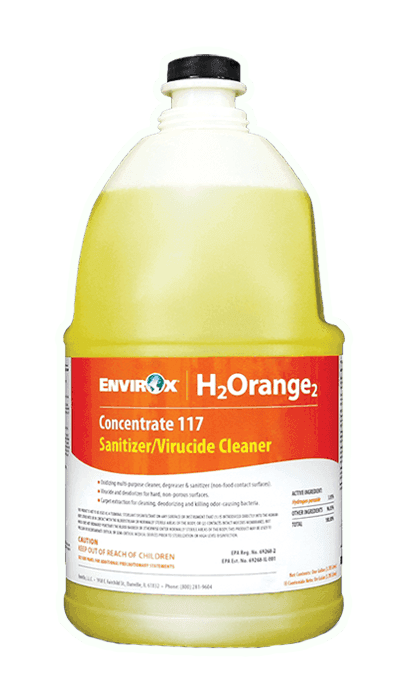
Brenda's Cleaning's medical office cleaning service uses Envirox H2Orange2, an EPA-registered, hydrogen peroxide-based sanitizer, specifically for this reason, applying a higher standard of disinfection appropriate for healthcare-adjacent environments rather than treating every commercial space the same way.
Building a Realistic Office Cleaning Schedule
Pulling this together, a reasonable schedule looks something like:
Daily: Desk resets, clean-as-you-go in shared spaces, trash and recycling removal
Weekly: Dusting and disinfecting shared surfaces, vacuuming and floor care, restroom cleaning and restocking
Monthly or seasonal: Window cleaning, HVAC vent attention, and reassessing organizational systems
Ongoing professional service: Regular office cleaning to handle the recurring maintenance side consistently, without relying on staff time
Having this written down, even informally, makes it much easier for a business to actually stick to than leaving it to individual judgment on any given week, and it gives new employees a clear reference for what's expected of them in shared spaces.
The First Impression Your Office Makes on Clients
Even a well-run business can lose credibility over small cleanliness details a client notices in the first thirty seconds of walking in. Dusty reception furniture, a smudged glass door, or an overflowing trash bin near the entrance sends a signal about attention to detail before a single conversation happens.
This doesn't mean an office needs to look showroom-perfect at all times. It means the areas clients actually see, the entrance, reception area, and any conference or meeting space, deserve a level of consistent attention that matches how much they affect a first impression, even if other back-office areas can run on a slightly more relaxed schedule.
Handling Cleaning Around a Business That Doesn't Stop
One challenge specific to office cleaning that homes don't have to deal with is scheduling around business hours. Cleaning during the day can disrupt meetings and normal workflow, while cleaning after hours requires coordination around building access and security. Most businesses find that an after-hours or early-morning cleaning schedule, arranged consistently with a professional service, avoids this friction entirely rather than trying to work cleaning around a live office.
This is also where a professional service tends to outperform an ad hoc approach of asking staff to pitch in on cleaning tasks between their regular work. Employees are generally more productive and satisfied focusing on their actual jobs, while a dedicated cleaning schedule handled by a professional team removes the friction of asking staff to split their attention between their work and facility upkeep.
Balancing Cost and Cleanliness Standards
Not every business needs the same level of cleaning frequency or intensity. A small office with a handful of employees and limited foot traffic has different needs than a client-facing storefront or a medical practice seeing dozens of visitors a day. Being realistic about your specific business's foot traffic, client interaction, and space size helps determine whether a weekly, biweekly, or more frequent cleaning schedule makes the most sense, rather than defaulting to whatever a similar-sized business down the street happens to do.
A conversation with a professional cleaning service about your specific space and how it's used is usually more useful than guessing at a schedule based on general assumptions, since the right frequency depends more on your actual foot traffic than on any one-size-fits-all industry standard.
Why This Matters for Colleyville Businesses Specifically
Colleyville's business community includes a mix of small offices, medical and wellness practices, and client-facing businesses where a clean, well-maintained space genuinely affects both employee experience and the impression clients walk away with. A consistent cleaning approach, rather than sporadic effort when things start looking obviously messy, tends to hold up better and cost less time overall than reactive cleaning.
Brenda's Cleaning has served Colleyville and the surrounding North Texas business community since Brenda Lora founded the company in 2014, bringing the same family-owned, consistency-focused approach to commercial clients that has defined our residential services.
Frequently Asked Questions
How often should an office be professionally cleaned?
Most offices benefit from a regular weekly or biweekly professional cleaning for the recurring maintenance side, with more frequent attention to shared high-touch surfaces and restrooms depending on foot traffic.
What's the difference between daily office upkeep and a professional cleaning service?
Daily upkeep, like desk resets and clean-as-you-go habits, prevents clutter and mess from building up. A professional cleaning service handles the more thorough disinfecting, floor care, and restroom maintenance that daily habits alone don't fully address.
Do medical offices need a different cleaning approach than a standard office?
Yes. Healthcare-adjacent spaces generally need a higher standard of disinfection using EPA-registered products formulated for that level of use, rather than the standard approach used in a typical office environment.
What office cleaning tasks get overlooked most often?
HVAC vents, window cleaning, and shared high-touch surfaces like doorknobs and light switches are commonly overlooked in a typical office routine, since none of them look obviously dirty during a quick glance around the space.
Can going digital really reduce office clutter?
Yes, for many offices. Reducing paper files where practical cuts down on one of the most common sources of desk clutter and makes information easier to locate later.
Is it worth hiring a professional cleaning service for a small office?
Many small offices find that a regular professional cleaning service is more cost-effective than expecting staff to handle deeper cleaning tasks on top of their actual jobs, especially for restrooms, floors, and disinfecting shared surfaces.
How do professional cleaning services typically schedule around business hours?
Most arrange an after-hours or early-morning cleaning schedule to avoid disrupting daily operations, coordinated consistently with the business around building access and security.
Ready for a Consistently Clean Office?
Daily habits keep things from sliding backward, but a professional cleaning service handles the rest. Brenda's Cleaning has provided House Cleaning in Texas and commercial cleaning to Colleyville businesses since 2014.
Get a free quote to find a cleaning schedule that fits your office.